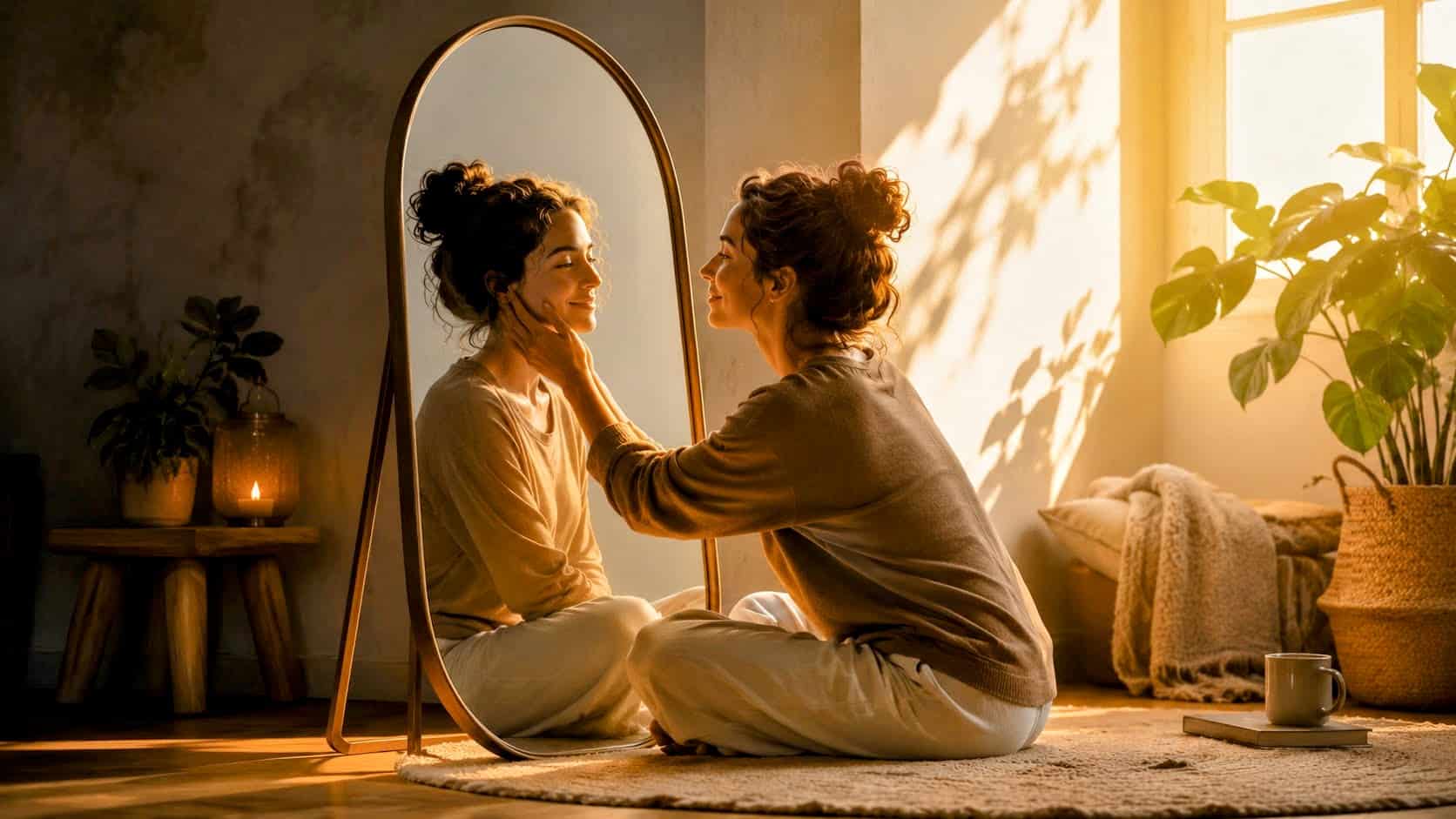
How to Stop Being Your Own Worst Enemy
I learned about How to Be Your Own Best Friend by Mildred Newman, Bernard Berkowitz, and Jean Owen while reading The 5 Resets. Since I have been on a journey of loving myself more and practicing self-compassion, I decided to bump this classic self-love book to the top of my TBR list. It didn’t hurt that it is a quick, short read!
On a personal note, I think this journey of self-compassion and being kinder to oneself is a worthwhile endeavor, and everyone should make the effort. In the past, I had a desperate need to be loved, which led me to make a lot of bad decisions. Through this journey, I have learned to feel more whole and satisfied just by loving myself. Realizing that I had to become my own source of love changed everything for me. Let’s dive and see this little book can spark that same shift for you.
Stop Waiting to Be Rescued
How to Be Your Own Best Friend asks readers to examine one of the most important relationships in their lives: the relationship they have with themselves.
The premise of the book is straightforward: if you can’t offer yourself patience and honesty, you’ll spend your life waiting for someone else to do it for you. The authors argue that many of us spend our lives waiting to be rescued, validated, admired, or completed by someone else. The problem is not that relationships are unimportant; the problem is expecting other people to provide the inner security that has to be developed within.
The central idea of this How to Be Your Own Best Friend review is that we need to become reliable companions to ourselves. A best friend is someone who tells the truth, offers support, gives perspective, and does not abandon you when life gets difficult. Newman and Berkowitz suggest that this is exactly the kind of relationship you should build internally. This was an eye-opener for me. I really wanted those relationships from people externally, the ones you see on TV where the characters connect against the world. It didn’t occur to me that I already had that potential with myself.
Prefer to listen instead of read? 🎧
Get the audiobook version of our favorite reads for FREE when you try Audible Premium Plus.
Start Your 30-Day Free TrialAs an Amazon Associate, ClayReads earns from qualifying purchases.
The Difference Between Self-Love and Self-Indulgence
Being your own best friend does not mean flattering yourself or pretending everything is fine. The book’s version of self-friendship is not shallow positivity. It is a powerful combination of self-acceptance and emotional honesty. To be your own best friend, you have to stop treating yourself like an enemy. You also have to stop avoiding the hard truths about your life, which is key. You want an honest relationship with yourself so you can improve and become better. You love your children and still want them to do their best and grow, so why not want the same thing for yourself?
Self-love is not presented as self-indulgence; it is presented as emotional maturity. That balance is what makes the book’s message so useful.
Measure the gain, don’t measure the gap. This phrase perfectly captures the book’s vibe. It is a fantastic way to be kind to yourself and celebrate your growth without harsh self-criticism. Harshness might feel productive, but it usually just keeps you stuck. You are much more likely to grow when you can look at yourself clearly without turning that honesty into a punishment.
Overcoming the Fear of Being Alone
One of the book’s major themes is the need to grow beyond childhood emotional patterns. Many of us carry the hope that someone else will eventually provide perfect comfort, understanding, or rescue. The authors drop a hard truth: adulthood requires you to stand on your own emotional feet. This does not mean becoming cold, isolated, or detached. Instead, it means recognizing that no relationship can remove the basic responsibility you have for your own inner life. Other people can love, support, and encourage us, but they cannot fully live our lives for us.
I discovered through therapy that I had a subconscious, unacknowledged fear that I would end up alone. Because of this self-love journey, I don’t have that fear anymore. I know I will never truly be alone because I have me.
The book encourages readers to give up the fantasy that happiness will arrive only when someone else finally understands or takes care of them. That shift can be uncomfortable, but it is deeply freeing. If your happiness depends entirely on outside validation, it will always feel unstable. If it begins with a stronger relationship with yourself, it becomes durable. When you are less dependent on others to fill every emotional gap, you can approach relationships with freedom, enjoying connection without needing another person to carry the full weight of your happiness.
The Takeaway: Making Peace with Yourself
How to Be Your Own Best Friend touches on how some people fear solitude because they are not comfortable in their own company. If being alone means being trapped with a harsh inner critic, solitude feels threatening. But if you have developed a better relationship with yourself, being alone can become peaceful.
The approach to happiness here is direct. Happiness is not a result of perfect circumstances, romance, or achievements. It is closely tied to emotional maturity and self-acceptance. The question isn’t simply, “How can I get more?” The deeper question is, “How can I live with myself more peacefully?” That idea gives the book its staying power.
Taking responsibility for your life doesn’t have to mean shame. You may not control every circumstance, but you do control whether you abandon yourself or support yourself through the pain.
Even though this is a compact self-help book, its core message remains relevant today. Being your own best friend means telling yourself the truth, without the cruelty. It means comforting yourself without denial and accepting your imperfections without giving up on growth.
My advice? Grab this book, love yourself, and be your own best friend. You will be a stronger, more resilient person when you are your own best advocate.
What do you think? What practical self-love advice do you have? Let me know in the comments below!




 using WordPress and
No responses yet