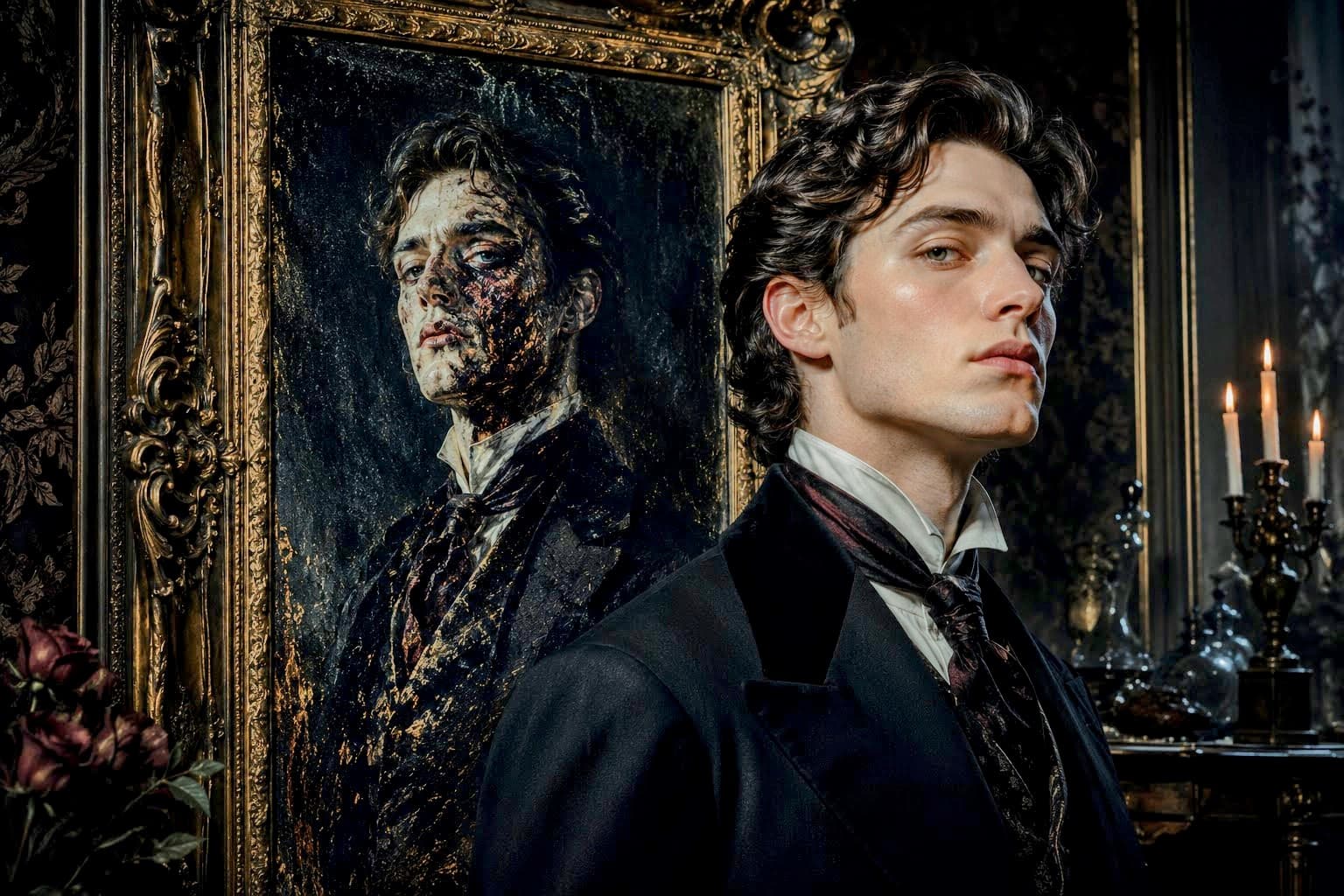
Vanity, Murder, and Masterpieces
I have wanted to read The Picture of Dorian Gray for a while. Dorian Gray is prominent in pop culture, and what I knew about the story I found fascinating. Yet, even knowing the basic premise, I wasn’t prepared for how genuinely good the story was, or how shockingly modern its dark descent into perversion felt. Oscar Wilde’s masterpiece is one of those books on my list of 100 must read books, and it more than earned its spot.
First published in 1890, this famous gothic horror novel tells the story of a beautiful young man whose wish for eternal youth leads him into a life of vanity, cruelty, secrecy, and moral decay. (Fair warning: this book has been out for over a hundred years, so I will be discussing full spoilers below!) Let’s dive in, shall we?
A Timeless Gothic Setup
The novel begins with Basil Hallward, an artist who has become completely captivated by Dorian Gray. Basil sees Dorian as an extraordinary subject, painting a portrait that captures the young man at the absolute height of his attractiveness. Through Basil, Dorian meets Lord Henry Wotton, a wealthy aristocrat with a seductive, dangerous worldview. Lord Henry preaches the absolute importance of beauty, pleasure, youth, and living without ordinary moral restrictions.
His words immediately infect Dorian, making him painfully aware that his physical perfection is fleeting. When Dorian sees Basil’s completed portrait, he is overwhelmed by the devastating thought that the painting will remain young while he rots. In a moment of sheer envy and desperation, he makes his fateful, supernatural wish: that the portrait would age instead of him.
Prefer to listen instead of read? 🎧
Get the audiobook version of our favorite reads for FREE when you try Audible Premium Plus.
Start Your 30-Day Free TrialAs an Amazon Associate, ClayReads earns from qualifying purchases.
The Cruelty of Youth
Dorian’s first major test comes through his relationship with Sibyl Vane, a young, poor actress. Dorian becomes infatuated, not just with the woman, but with her as an artistic ideal, imagining her as Juliet or Rosalind. However, once Sibyl experiences real love, the artificial emotions of the stage no longer matter to her. Her acting suffers, and Dorian is utterly embarrassed.
Instead of showing compassion, he rejects her with ice-cold cruelty. It reminds me of those harsh middle school days when kids drop a friend just because they aren’t socially “acceptable” anymore, except Dorian takes this shallow cruelty to a deadly extreme.
After Dorian abandons her, Sibyl dies by suicide. This is the novel’s first massive turning point. Under Lord Henry’s toxic influence, Dorian distances himself from the human tragedy, treating it almost like a dramatic play rather than a real death. Then, he notices something terrifying: the portrait has changed. The painted face now carries a cruel expression, while Dorian remains perfectly young and innocent. His wish has somehow come true.
A Secret Life of Corruption
From that point forward, the portrait becomes the grotesque, hidden record of Dorian’s life. He locks it away, outwardly remaining elegant and untouched by time, while secretly pursuing uninhibited pleasure. He ruins the lives of those around him, leaving a trail of dark rumors through London society.
The true horror of Wilde’s novel comes from this split between Dorian’s charming public image and his rotting soul. When Basil Hallward eventually confronts Dorian about the rumors, Dorian shows him the painting. It has become monstrous. When Basil urges him to pray for forgiveness, Dorian snaps. In a moment of pure rage and panic, he murders his friend.
He is no longer just selfish; he has now committed murder. To cover it up, he forces a former friend, Alan Campbell, into destroying Basil’s body by blackmailing him with a past secret. It’s chilling to see exactly how far Dorian will go to protect his pristine facade and maintain the appearance of innocence.
The Inevitable End
The pressure around Dorian continues to mount, especially when Sibyl’s vengeful brother, James Vane, nearly catches up to him. The entire life Dorian has built depends on unnatural secrecy and deception. Near the end of the novel, he briefly wonders if he can change, but his desire for redemption is entirely vain, he only hopes his “good deeds” will make the painting look better.
When he checks the portrait and sees no sign of moral renewal, he makes a desperate, fatal choice. He takes the same knife used to kill Basil and stabs the painting, hoping to destroy the last visible evidence of his crimes.
The result is fatal. The servants discover a horrifying scene: the portrait is completely restored to its original, breathtaking beauty. On the floor lies a withered, disfigured old man with a knife in his heart, identifiable only by his rings. The supernatural bargain comes full circle, and the consequences Dorian tried to outrun finally crash into his physical body.
A Modern Victorian Nightmare
I have to be honest: I wasn’t prepared for how contemporary this horror book felt. Despite being a Victorian novel, Dorian’s slide into untouchable, immortal perversion feels incredibly modern. The chilling detail Wilde gives to Dorian’s corruption gave me chills.I absolutely loved The Picture of Dorian Gray, and it is on my “will read again” list. Another classic successfully checked off my list of 100 books!




 using WordPress and
No responses yet