Reluctant Heroes and Robot Feelings
It’s time once again for another Murderbot Diary review. And honestly? Spoiler alert: these novellas just keep getting better. If you’ve been following along, you know I’ve been enjoying Martha Wells’ Hugo-award-winning series. If you need a quick refresher before we jump into Rogue Protocol, check out my reviews of All Systems Red and Artificial Condition.
Now, let’s cut the chit-chat and dive straight into the corporate chaos of Rogue Protocol.
The Mission: Payback and Space-Debris
Rogue Protocol is the third entry in the series, and it pushes the narrative further into the murky waters of corporate conspiracy and reluctant heroism. We pick up with Murderbot still operating on its own.
Murderbot isn’t just wandering the galaxy to watch Sanctuary Moon in peace anymore. It’s on a mission. It wants payback for Dr. Mensah. After what the GrayCris Corporation did to her team and their expedition in book one, Murderbot is determined to find the “smoking gun” that will hurt the corporation. This leads it to Milu, an abandoned terraforming site that is the definition of “sketchy.”
One of the things I love about this setup is the atmosphere. Murderbot realizes that the terraforming station is essentially a giant cover-up. GrayCris abandoned the project and is letting the station slowly decay into the planet’s atmosphere, ensuring all evidence is incinerated. It’s a literal ticking clock, and it provides a perfect, high-tension backdrop for the action. It also shows just how limitless the “Murderbot-verse” is; Wells can drop us into any corner of the galaxy and make the world-building feel lived-in and dangerous.
Prefer to listen instead of read? 🎧
Get the audiobook version of our favorite reads for FREE when you try Audible Premium Plus.
Start Your 30-Day Free TrialAs an Amazon Associate, ClayReads earns from qualifying purchases.
The “Anti-Murderbot”: Meeting Miki
To get onto the station, Murderbot has to do what it does best: hack its way into places it doesn’t belong. It slips onto a ship carrying a new survey team consisting of Don Abene, Hirune, and Miki.
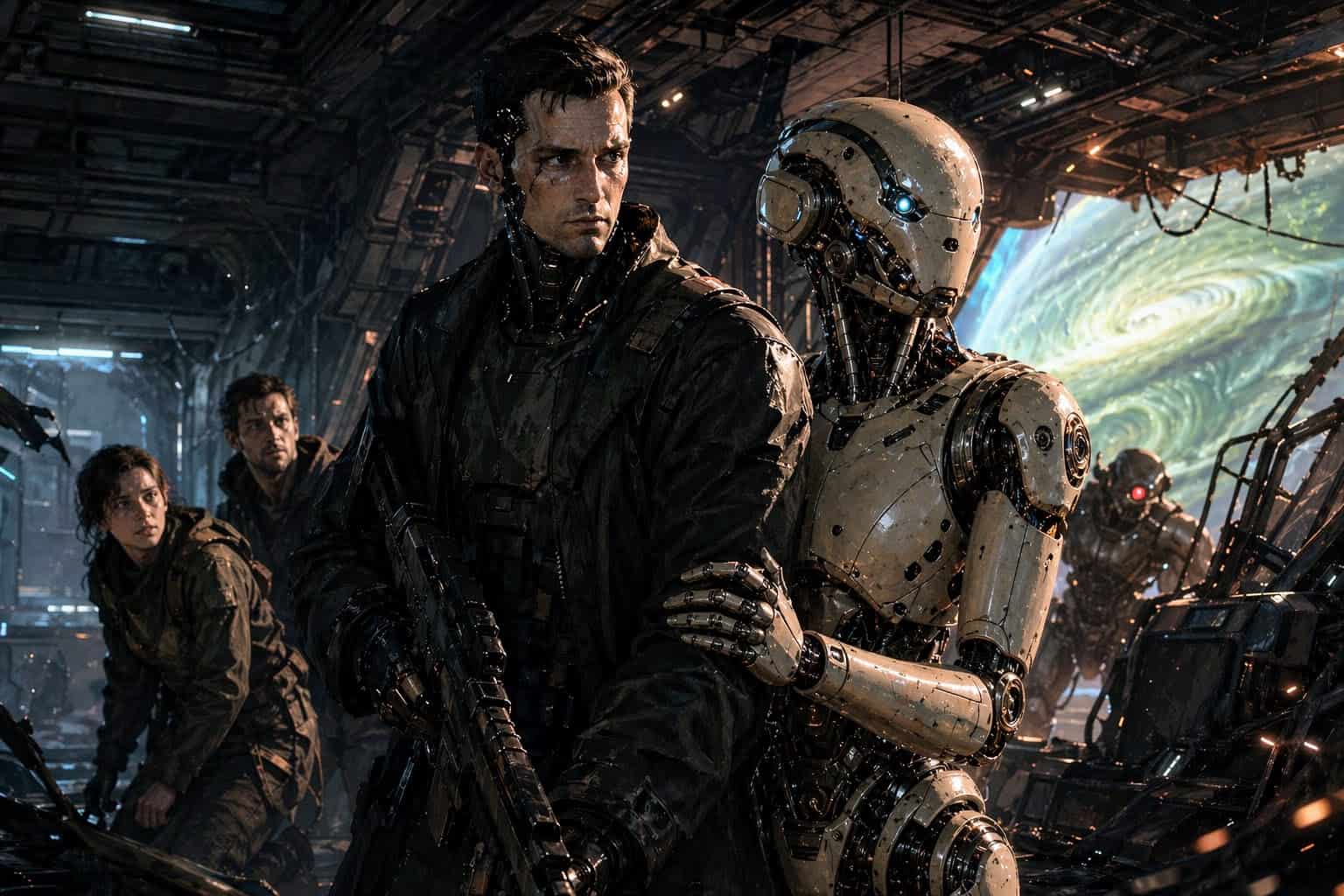
Now, let’s talk about Miki. Miki is a “human-form bot,” but more specifically, it’s a “Pet” bot. Miki is the polar opposite of our protagonist. It’s open, incredibly affectionate toward its humans, and has never had its governor module hacked. To Murderbot, Miki’s existence is an “inconsistency.” It can’t understand why a bot would want to be that close to humans or why it would trust them so implicitly.
I think Miki is the most important character in this novella. Miki serves as a mirror. It shows Murderbot that relationships between bots and humans don’t always have to be defined by the “Master/Slave” dynamic or by the threat of a governor module. Even though Murderbot is in deep denial, its protective instinct for the humans under its care, the same humans it claims to find “annoying” and “inefficient”, is fundamentally the same as Miki’s love for Don Abene.
Stress, Sabotage, and Security
The sequence where Murderbot sneaks onto the shuttle and eventually onto the station was genuinely stressful to read. I found myself holding my breath. I feel like no matter how much of a master hacker you are, the “inevitability” of getting caught is always lurking. Plus, there’s the existential dread of being stranded. If the station falls into the atmosphere while you’re still on it, being a top-tier security unit doesn’t help you much.
Predictably, things go sideways. Murderbot’s cover is blown when a massive combat bot attacks the team. Naturally, Murderbot can’t just sit there and watch—it intervenes to save Don Abene, exposing its superior combat capabilities in the process.
This is where we meet the “professional” security humans, Wilpin and Gerth. I’ll be honest, Murderbot’s internal monologue about how inefficient these two are is some of the funniest writing in the book. As it turns out, Murderbot’s cynicism is justified: Wilpin and Gerth aren’t just bad at their jobs; they are GrayCris plants sent to sabotage the entire mission. It turns into a game of cat-and-mouse where Murderbot has to be the smartest person (or construct) in the room just to keep everyone breathing.
Getting Vulnerable: The Altruism Factor
The climax of Rogue Protocol is non-stop, high-octane action. The humans make, in Murderbot’s expert opinion, absolutely “insane” decisions that put everyone in jeopardy. In the final face-off against a combat bot, Miki makes the ultimate choice. It doesn’t abandon Murderbot, and it doesn’t hide. It sacrifices itself to protect Don Abene and help Murderbot win the fight.
This is where I have to get vulnerable with you all. I can’t help myself; I always imprint the most altruistic reasons onto a character’s decision-making in moments like this. Why did Miki do it? Was it just programming? I don’t think so. I think Miki genuinely cared and was wililng to make the ultimate sacrifice.
Murderbot is left shaken (in its own internal, digital way). It considers Miki to be “one of those humans” it had to protect, a sentiment that shows just how much Miki’s “personhood” affected it. This moment is the emotional anchor of the book, and it’s why I think this series is more than just “lasers and hacking.” It’s about what it means to choose who you care for.
Is Murderbot Growing Up?
I’ve mentioned before that I identify with Murderbot as my teenage self. And let’s be real: teenagers are annoying. They are grumpy, they want to be left alone in their rooms with their media, and they react to every emotional situation with a heavy sigh and an eye-roll.
I can see how Murderbot’s “I hate everyone” personality could get repetitive after a while. However, Martha Wells isn’t letting that happen. In Rogue Protocol, we see signs of growth. It isn’t just “angst” anymore; it’s a systematic dismantling of Murderbot’s worldview. Seeing Miki’s relationship with humans forces Murderbot to reconcile its own feelings of loyalty and friendship. It might not want to admit it’s “growing,” but the evidence is right there in the data logs.
Final Verdict: The TV Show Dilemma
I have to say, this is the first Murderbot novella that I would be excited to see on television. The visuals of the decaying Milu station and the fight against the combat bot would be incredible with a high-budget VFX team.
Speaking of the screen… what are we thinking about the Apple TV+ show? I’ll be honest: I really dislike the promotional “poster” look I’ve seen so far. It doesn’t quite capture the “SecUnit” vibe I have in my head. But after reading Rogue Protocol, I feel like I have to give the show a chance. The story is just too good to ignore.
What do you think, ClayReaders? Is Miki’s sacrifice the saddest moment in the series so far? And more importantly, should I actually watch the show when it drops, or am I going to be too annoyed by the visuals?
Let me know in the comments below!

 using WordPress and
Comments are closed