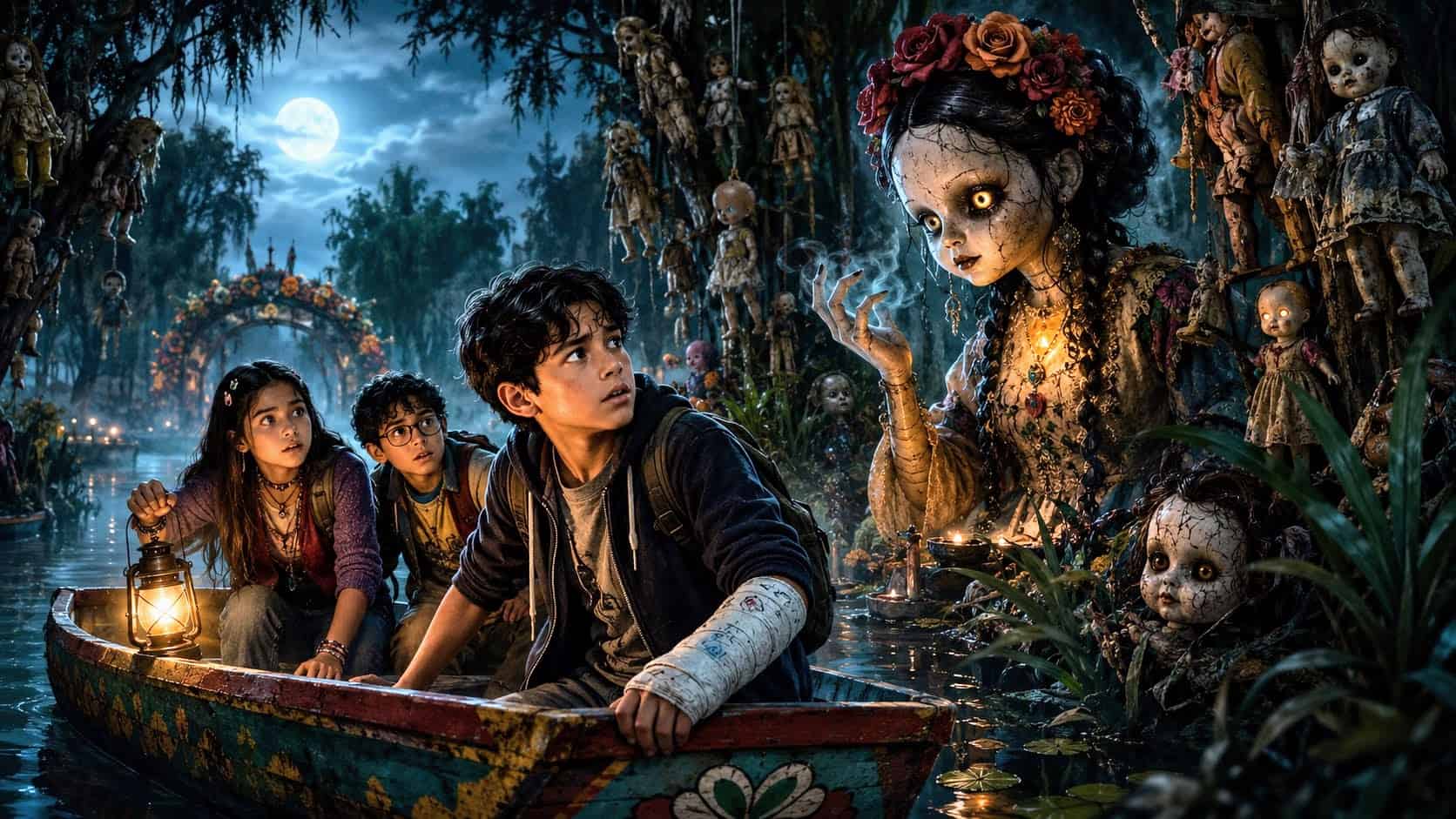
A Masterclass in Creeping Out Middle Schoolers
My 9-year-old daughter was so terrified by Lost on Doll Island by Cassandra Ramos-Gomez that she refused to go to sleep alone. She read it every single night until she finished it, completely captivated by how scary the story was. Naturally, as a dad, I realized it was my duty (and pleasure) to be interested in anything my kids are interested in, so I decided I had to read it immediately. Plus, that doesn’t stop me from occasionally pushing them into things I like, much to my wife’s chagrin.
Lost on Doll Island transported me right back to the books I devoured during the middle-grade stage of my reading journey, just updated to be perfectly modern and relevant for kids today. I was a huge John Bellairs fan growing up, and as nostalgia hits me, I’ve tried to get my daughter into his books. Unfortunately, she says the language is too “old-timey.” And heaven forbid they use an actual landline telephone in a book; my daughter would be so confused at what that device even is!
If you are looking for a great modern middle-grade horror book, here are my thoughts on why this one works so well.
What is Lost on Doll Island About?
The story follows eleven-year-old Diego, a Mexican American boy whose life has been abruptly uprooted by his parents’ separation. Diego has been sent from Texas to stay with his Tía Maria and Tío Tony in Mexico City while his parents figure things out.
He is already struggling with the heavy possibility of his family fracturing, and being placed in an unfamiliar country only makes him feel more powerless. To make matters worse, Diego is stuck in an uncomfortable arm cast. Initially, I questioned the necessity of the broken arm, but as the story progresses, it becomes a detail that ratches up the tension. Ramos-Gomez uses the cast to add an inescapable layer of physical vulnerability and claustrophobia to Diego’s emotional distress. It ramps up the tension perfectly.
While lost in Mexico City, Diego wanders into a strange antique shop run by an elderly woman named Ximena. She tells him the legend of a magical “Wish Doll” hidden deep in the canals of Xochimilco. Desperate to fix his family and return to Texas, Diego becomes obsessed with finding the doll, viewing it as the ultimate solution to his shattered life.
Prefer to listen instead of read? 🎧
Get the audiobook version of our favorite reads for FREE when you try Audible Premium Plus.
Start Your 30-Day Free TrialAs an Amazon Associate, ClayReads earns from qualifying purchases.
Characters and Themes
Diego is a kid dealing with very real, heavy issues. His father has always pushed him to “toughen up” and criticizes him for being too emotional. Because of this, Diego tries to hide it when he is frightened, sad, or overwhelmed, even when he desperately needs help. It makes him a highly relatable protagonist for any kid dealing with big feelings.
Along the way, Diego begrudgingly makes two new best friends:
- Itzel: The outgoing, super-friendly know-it-all who inserts herself into Diego’s life.
- Jandro: A boy who instantly bonds with Diego after Diego defends him from a school bully.
Diego enlists Itzel and Jandro to help him find the Wish Doll, shading the truth (okay, flat-out lying) to get them to agree. It is this exact dynamic that I love in middle-grade books. They are bonded together by executing what they think are incredibly smart master plans, but in reality, they are just kids making dumb decisions, and they have to face the consequences together.
Is Lost on Doll Island Too Scary for Kids?
As the kids sneak away on a field trip to find the hidden island, the creepy factor dials up to eleven. The Wish Doll begins directly communicating with Diego, manipulating him and prompting him to break the binding spells keeping it trapped.
The psychological manipulation and the unsettling environment of the doll-filled island are highly effective. If your child is prone to nightmares, they might want to read this one during daylight hours!
I’ll be honest: I initially thought this was just going to be a fun treasure-hunt adventure where the “wish” ends up teaching Diego a wholesome lesson. Once the doll started whispering clues to him, I got clued in that the Wish Doll was actually evil, and things were not going to turn out how I thought. The dread builds masterfully.
The Final Twist [SPOILER ALERT]
If you want to go in completely blind, skip to the conclusion!
I don’t want to spoil the entire plot, so I will gloss over the finer details. Diego eventually learns he has been tricked by the malicious entity inside the doll, putting his friends in grave danger for his own selfish goals. He only manages to escape the island by coming clean and working together with Itzel and Jandro.
The best twist? When they finally escape, they realize time hasn’t passed on the outside the same way it did on the island. Despite being ready to face the music, the kids completely get away with their dangerous stunt because no one even noticed they were missing. As a parent, that is slightly annoying, but I’ll let it go for the sake of the story! Ultimately, the ending perfectly leaves the door open for Diego, Itzel, and Jandro to return for another horror adventure.
Should Your Kid Read It?
Lost on Doll Island is a fantastic, spooky ride that blends real-world emotional struggles with supernatural thrills. It easily earned my daughter’s seal of approval, and it definitely earned mine.
I have to admit, middle-grade books are not usually my main area of expertise. If you have any spooky or adventurous book recommendations for me and my daughter to read next, let me know in the comments below!

 using WordPress and
No responses yet