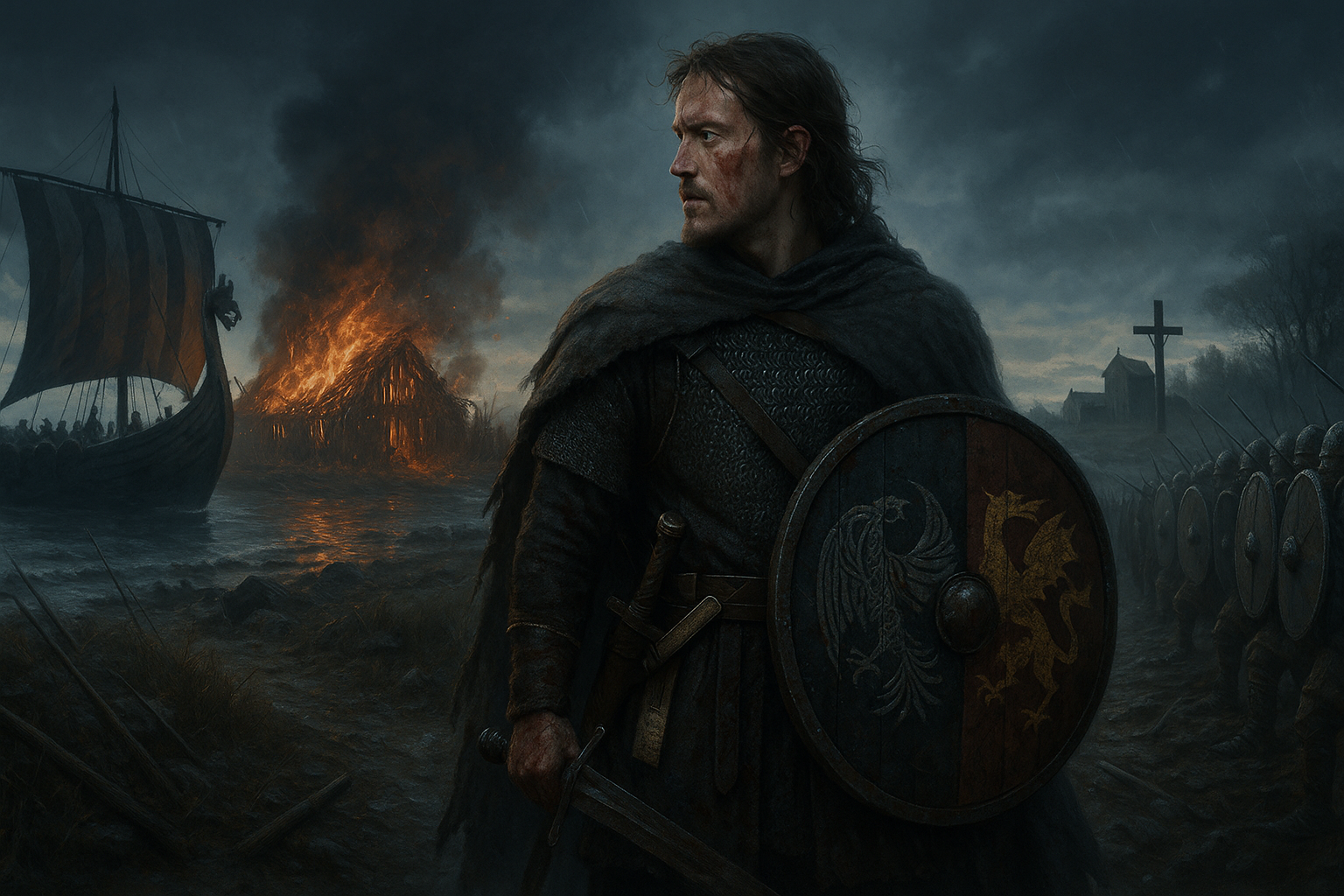
The Last Kingdom by Bernard Cornwell
As I mentioned in my Summer Reads wrap-up, I am a huge fan of The Last Kingdom Netflix series. I’ve gone through the whole thing twice! And while I love the show, the first book in Bernard Cornwell’s Saxon Stories series, The Last Kingdom, fixes the main issues I had with the early seasons.
Getting Inside Uhtred’s Head: The Book’s Biggest Advantage
The novel follows Uhtred of Bebbanburg, a Saxon noble captured and raised by Danes. What the book does better than the series is get you inside Uhtred’s head. You feel his conflict and truly understand his desires and fears. In the first season of the show, Uhtred often comes off as an arrogant prick who is just cocky about his skills. The book gives you the behind-the-scenes of what he is actually thinking. A great example is his decision to go to Wessex after Ragnar’s murder. In the show, it seems like a simple, pragmatic choice for survival. In the book, we experience his intense internal monologue: the deep shame of seeking help from a physically weak Saxon king, the rage against his own desperation, and the constant battle between his Danish oath to avenge his family and his need to find allies. This gives Uhtred a texture that is sadly missing from the first season of the Netflix series.
Life as a Dane vs. Service to the Saxons
The story opens with our hero in his home of Bebbanburg, where he isn’t even named Uhtred yet. He is Osbert, the second son. He only becomes Uhtred when his older brother is brutally killed by invading Danes. Now heir to Bebbanburg, young Uhtred watches as his father is slaughtered in a cunning Danish trap. In a moment of brash courage, Uhtred himself attacks the Danish warlord, Earl Ragnar the Fearless. Instead of killing him, Ragnar is amused by his fire and adopts him.
You feel the warmth and camaraderie of his new Danish family. Earl Ragnar is a powerful, just (for a Viking), and even loving father figure. Uhtred comes to adore him, his wise blind father Ravn, his son Rorik, and his daughter Thyra. Alongside his fellow Saxon captive, Brida, Uhtred fully embraces the Danish way of life. He honors their gods, learns their way of war, and comes to love their fierce joy for life.
It’s easy to see why. The Saxon world he was born into was one of pious misery, fasting, and constant, nagging guilt over sin. The Danish world was one of vibrant life—of feasting halls filled with song, of fierce loyalty, and of a belief that a warrior’s death led to the glory of Valhalla. For a proud and spirited boy, the choice was simple. He was a Dane at heart, and the grim, rainy world of the Christians was something he never wanted to return to.
But this life is shattered by a disgruntled Dane named Kjartan. Along with his one-eyed son Sven, Kjartan orchestrates a horrific attack on Ragnar’s home, burning it to the ground. Uhtred and Brida, away at the time, avoid the slaughter. They are now outcasts, hunted by their Danish enemies and distrusted by Saxons. Their journey for survival leads them south to the one place still holding out: Wessex, the last kingdom.
Alfred the Great, Master Manipulator
Here we meet Alfred, and in a key book vs. show difference, this Alfred is a cunning political operator from the start. He was a reluctant king in the Netflix series, but the book implies that Alfred was able to use political power to gain the throne . With the help of a family friend, Father Beocca, Uhtred finds himself in the king’s service, but it is a service of constant manipulation. Alfred’s ultimate goals are a mystery, but one thing is clear: he is a master strategist. He doesn’t just command; he maneuvers. For example, he tricks Uhtred into marriage, but the manipulation is deeper than it seems. He saddles Uhtred with a pious Wessex wife to tie him to the land, but he also chooses a woman whose family is in massive debt to the church. This gives Alfred multiple levers of control: marital, financial, and religious. Despite this, a grudging respect develops. Uhtred can’t help but secretly admire the sheer intelligence of the king he openly despises.
History Brought to Life
Throughout all this, Bernard Cornwell also brings a stunning flavor of historical realism to his novel. The details about sword-making, Viking longships, and the clash of cultures make the world feel tangible and alive. The book’s description of the shield wall is a perfect example. Cornwell puts you inside the terror of it, the claustrophobic press of bodies, the splintering of shields, the smell of sweat and blood, the rhythmic chants to keep courage high, and the short, brutal stabs with swords and spears from behind a wall of wood and iron. The climax of the book, where Uhtred finally fights in a shield wall and confronts the terrifying Ubba, is made all the more intense by this realism. For any history buff, one of the best parts of the book is the “Historical Note” at the end, where Cornwell meticulously details which characters were real, which events happened, and where he used creative license.
Final Thoughts: Should You Read The Last Kingdom?
If you are a fan of the Netflix series, you absolutely need to read the book that started it all. This review has only scratched the surface. The novel provides a depth of character and historical detail that a visual medium can only skim. And if you’ve never seen the show, what are you waiting for?! Go watch it!
Destiny is all!Have you read The Last Kingdom or other books in The Saxon Stories? What did you think of the differences between the books and the show? Let me know in the comments below!

 using WordPress and
Comments are closed