More Than a Movie: A “Spooktober” Review of Psycho
This book has been on my to-be-read shelf for at least two years. I love the Hitchcock movie, and when my wife discovered the Bates Motel TV show, we watched it together. I got to share the original movie with her after we finished the series, a special moment I’m still fond of. So, Psycho went on the TBR pile, and I’ve finally gotten to it during Spooktober.
What I found was a sharp, chilling novel that surprisingly holds up.
The Road to the Bates Motel
We open on Mary Crane, a woman faced with a desperate decision. Feeling behind on life and her future with her boyfriend, Sam Loomis, she impulsively steals a large cash payment from work and flees town. We really live inside Mary’s head, feeling her frustration and her panicked, amateurish plan to get away with the crime.
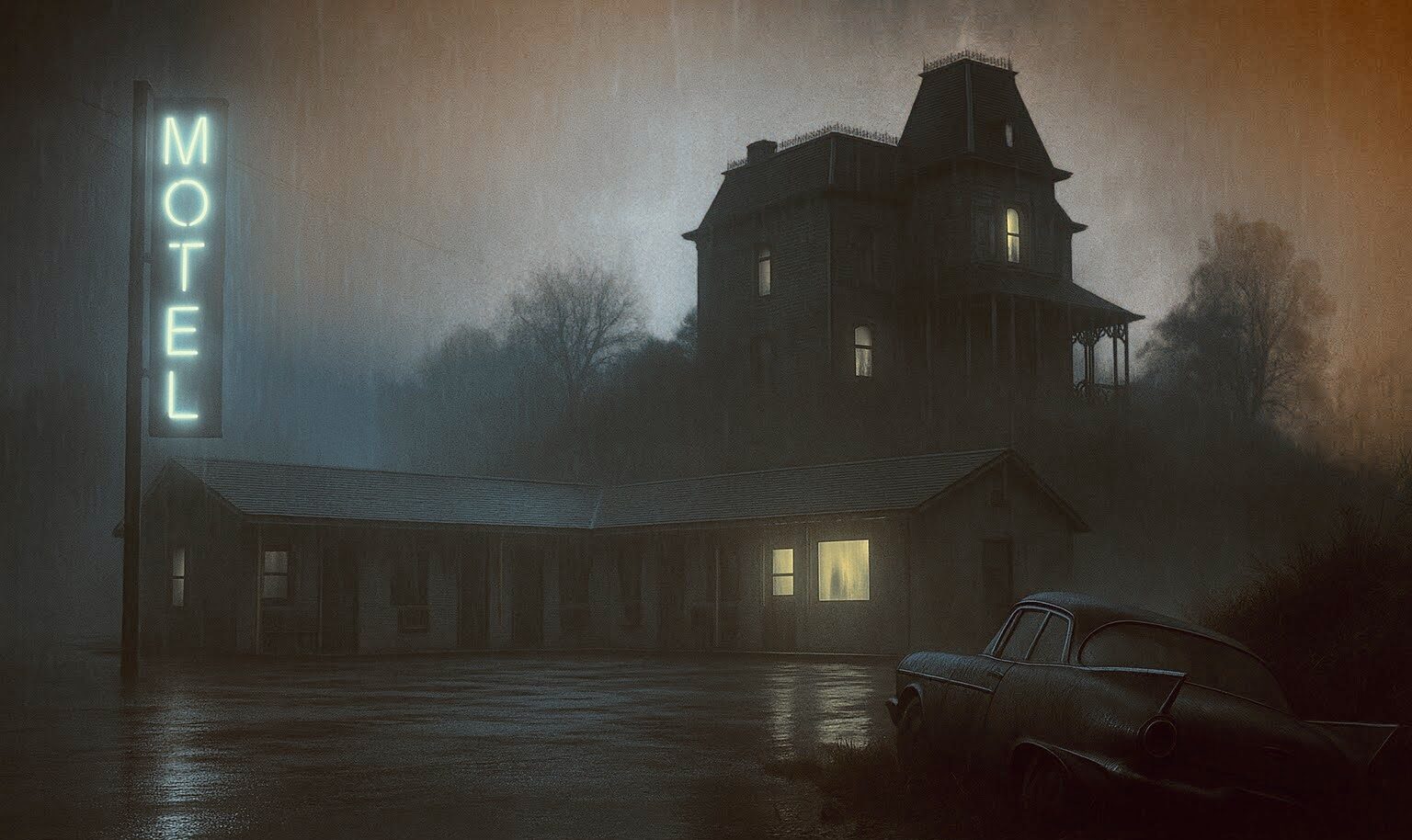
As night and a rainstorm close in, she makes a wrong turn and pulls into the nearly empty Bates Motel, a lonely cluster of units beneath a dark, imposing Victorian house.
The motel’s proprietor is Norman Bates, a name that is infamous in pop culture. But the Norman of the book isn’t the one from the movie; he’s a pudgy, lonely, middle-aged man who invites Mary to share a simple supper in his office. He alternates between shy warmth and defensiveness, especially when talking about his domineering “Mother.”
What follows is the novel’s signature eruption of violence. As Mary showers, an old woman, glimpsed as a silhouette, attacks with a butcher knife. Norman, horrified, discovers the body and immediately moves to protect his Mother—hiding the car and body in the swamp, cleaning the room, and locking his mom away for her own and everyone else’s safety.
The Search for Mary
The story then shifts to Mary’s sister, Lila Crane, who arrives in town determined to find her. She teams up with Sam, and soon they’re joined by Milton Arbogast, a private investigator hired to retrieve the stolen money.
Arbogast’s investigation eventually leads him to the Bates Motel. He’s not satisfied with Norman’s nervous, evasive answers and senses that “Mother” knows something. When he fails to check in, Lila and Sam go to the local sheriff, who delivers a shocking fact: Mrs. Bates died years ago in a murder-suicide. If she’s dead, who is in the house?
Lila and Sam’s own investigation at the motel leads to the story’s famous, horrifying climax, where Lila finds Norma Bates in the fruit cellar in both of her forms. The novel closes with the most chilling voice of all: Mother’s, in a final internal monologue, insisting that “she” wouldn’t even harm a fly.
Why the Book Still Holds Up
Psycho is so iconic that the plot isn’t really a spoiler, but the execution is what makes it a masterpiece.
I was struck by the “anachronistic vibe” of the characters. There’s a small-town innocence to them, a dismissiveness that just doesn’t exist in our modern world of true-crime podcasts. It’s this very innocence that allows a secret as dark as Norman’s to fester.
I’ll also go out on a limb: as a man living in 2025, I think Robert Bloch writes women really well. Mary, Lila, and even Mother feel like real people with agency, dealing with problems and systems set up against them. They never felt like clichés.
Final Verdict
Even though I knew the twist, the novel still held me tight. I loved how it teases out the mystery, making you wonder if Norma is really dead. Because of the iconic movie, I even pictured the whole thing in black and white in my head. It’s a fast, frightening, and fantastic novel that absolutely holds up.What is your favorite Psycho property (book, movie, or show)? Let me know in the comments!

 using WordPress and
Comments are closed