Hallowe’en Party Review: A Poirot Mystery with “WHOAH” Moments
It was October and I wanted to find a spooky Halloween mystery read to go along with my space horror books I am reading this fall. I specifically searched for an Agatha Christie mystery that fit that criteria, which is how I came across Hallowe’en Party.
I have to say, the Goodreads reviews were not exactly making me excited, but it fit my very loose criteria so I went ahead and read it anyway. Let’s dive in.
The Deadly Hallowe’en Party
When Ariadne Oliver visits her friend Judith Butler, she helps the neighbors stage a children’s Hallowe’en party. During preparations, a teenager named Joyce Reynolds brags that she once saw a murder, though she hadn’t recognized it as such at the time. Already having a reputation for embellishing stories, no one believes her and is even mocked.
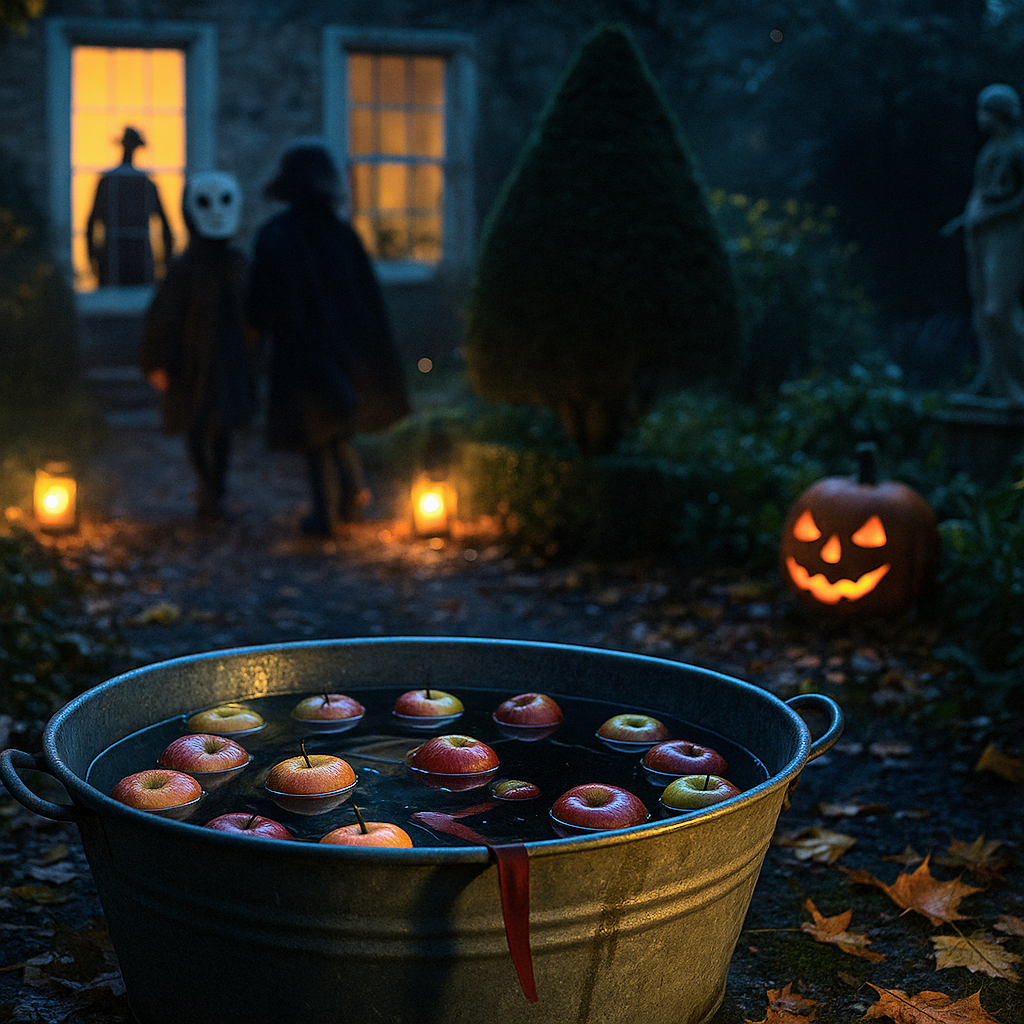
No one, that is, until she is discovered dead, drowned in the apple-bobbing bucket.
WHOAH Moment #1: A Child’s Death?!
This was my first WHOAH moment. Agatha Christie killed off a child character?!?! My mind was reeling. Was this crossing some unspoken cultural norm when this book was published in 1969? In an age where current thrillers often involve missing children, I felt it must have been really out of the norm in Christie’s time.
Did this story cross some sort of norm and cause an outrage from critics? I guess I will never know because I am not willing to do the leg work to find out. If someone knows, let me know in the comments below!
WHOAH Moment #2: A “Modern” Poirot?
Obviously, Ariadne involves her friend Hercule Poirot to help solve the case. Poirot arrives and questions the host, who conveniently chalks up the murder to a released homeless mental patient.
My second WHOAH moment. My assumption was this story was taking place in the 30s. Was this type of thing happening then? These types of details kept throwing me off. I’ve watched the Poirot TV series extensively, but I have only read a couple of Poirot stories. These details seem too modern (or at least late 20th century) for Poirot to be dealing with.
The Case… and WHOAH Moment #3
Poirot visits an old acquaintance, retired Superintendent Spence, and compiles a shortlist of recent local cases that might match Joyce’s claim. The sudden (officially natural) death of wealthy widow Mrs. Llewellyn-Smythe; the disappearance of her au pair, Olga Seminoff, after a favorable update to the will was unmasked as a forgery; and the stabbing of solicitor’s clerk Leslie Ferrier, a man with a record for forgery. If Joyce was being truthful, which of these events was the true cause of her death?
Poirot was on the case, and the case was, let’s say, a little boring.
Until Joyce’s brother also ends up dead.
My third WHOAH moment for the book. Another child murdered? Is Agatha Christie just offing children up left and right and I don’t know about it? Am I missing some aspect of Christie that others know about? Is she ahead of her time with using a child’s death as a motivator for Poirot?
Final Verdict: A Misfire for a Mood Read
I honestly don’t know if it is worth spoiling the ending, as my plot summary is weak and I think my “WHOAH” moments are more interesting.
In the end, it was a fine story that really didn’t lean into the title or use Halloween to any effect. I had the assumption that, this being Christie, there could be cult elements or seances that would have provided color and good red herrings. But there was none of that. It was a pretty straightforward murder mystery that the reader could probably figure out with a modicum of thought.
Should I continue with more Poirot mysteries? And which ones should I read? Let me know in the comments below!




 using WordPress and
Comments are closed