Shards of Earth by Adrian Tchaikovsky
Imagine Firefly colliding with a galaxy-sized mystery that could end humanity and that’s the energy of Shards of Earth, the first book in Adrian Tchaikovsky’s Final Architecture series.
I discovered this book on a family road trip when we stopped at a Barnes & Noble. If you have kids, it’s a perfect road trip pitstop since there’s something for everyone, and for me, that something was Tchaikovsky. I’d already finished Children of Time and was eager to start another new series by the same author. The title and cover instantly hooked me. Shards of Earth is such an evocative name, and the story lives up to it.
Before diving into the plot, I should say this book leans heavily into universe-building. Tchaikovsky creates a vast, complex galaxy full of political factions, altered humans, cloned warrior races, and the mysterious, moon-sized Architects. It’s impressive, layered, and often dazzling, but at times it overshadows the characters, especially early on.
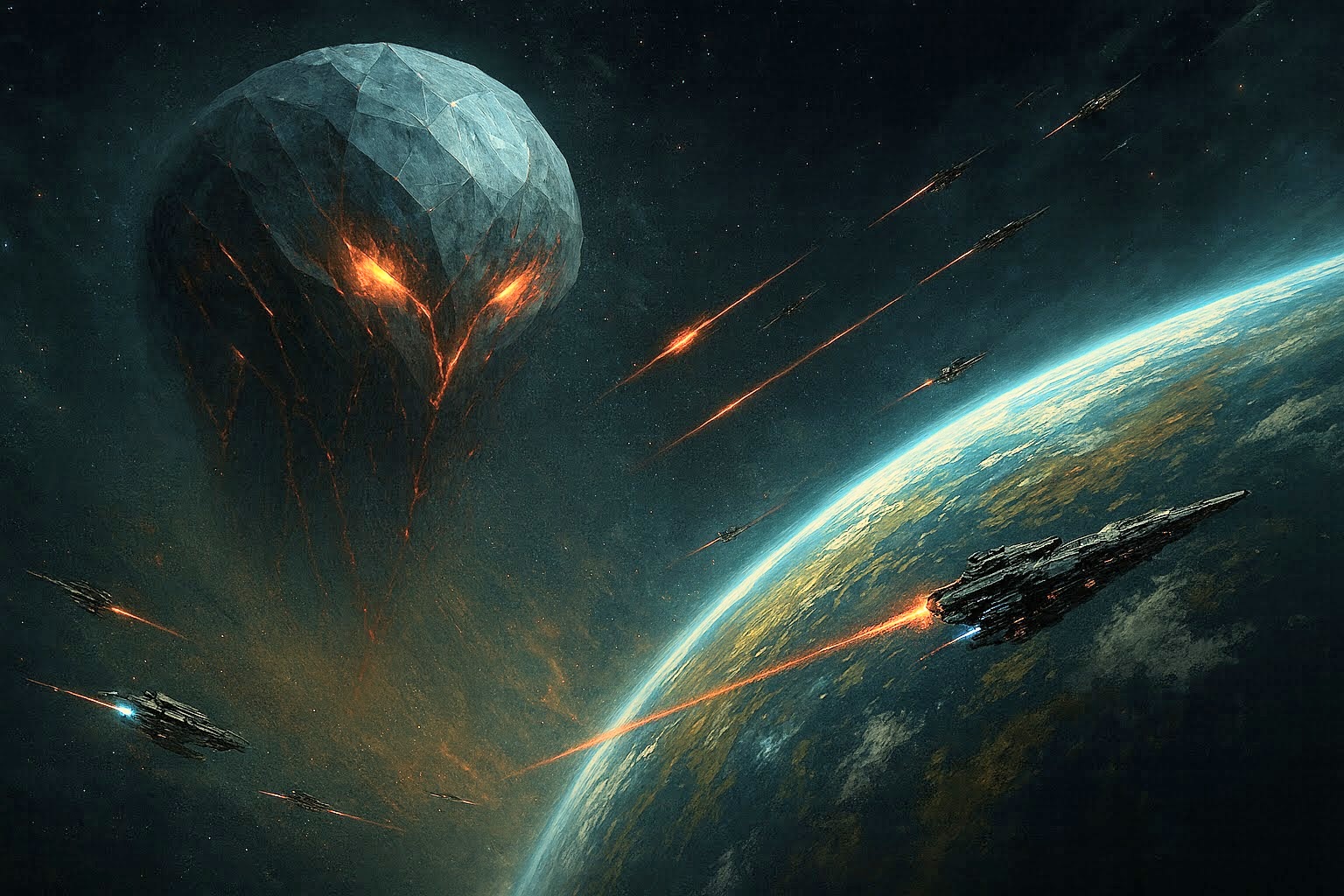
The backstory is simple to explain, but huge in impact: one day, a moon-sized alien craft appears in the solar system and sculpts Earth into a grotesque piece of art. Humanity names it “The Architect,” and its arrival sparks a desperate war. Most of the conflict involves evacuating planets before they’re destroyed. The turning point comes when a human makes psychic contact with an Architect, leading to the creation of Intermediaries, surgically altered humans who can communicate with them.
Idris Telemmier, our protagonist, is one of those Intermediaries. In the final battle of the war, he makes contact that convinces the Architects humans exist — and the war ends. The Architects retreat into an eerie realm known as ‘unspace’, and humanity is left to rebuild.
When we meet Idris, decades later, he hasn’t aged a day and hasn’t slept since the war — side effects of his Intermediary status. He’s hiding out on the Vulture God, a junk salvage ship crewed by misfits and mercenaries, trying to stay far from politics and danger.
Then there’s Solace, a Partheni captain. The Partheni are cloned from a legendary general, bred to be fearless, intelligent, and disciplined. Once frontline soldiers against the Architects, they now work as hired muscle in peacetime. Solace has her own mission — and her own secrets.
The galaxy is fractured:
- The Partheni – elite clone warriors
- The Council of Human Interests – bureaucratic political power
- The Hegemony – alien civilizations with their own agendas
- The Agency – the shadowy remnant of humanity’s Intermediary program, still hunting for signs of the Architects
On a salvage job in a deep-space junkyard, Idris senses something impossible: a new Architect. He wants nothing more than to run, but Solace’s soldiers are in danger. Their escape draws them into a dangerous web of factions, all trying to control the knowledge of this new threat. What follows is part treasure hunt, part political thriller, with Idris and Solace racing from one lead to the next, navigating shifting allegiances and the shadows of their pasts.
What Worked for Me
- Worldbuilding: Immense, textured, and believable — the galaxy feels lived-in.
- Scale: Stakes that stretch across worlds but still allow for intimate, character-focused moments.
- Tone: That “one ship against the galaxy” vibe, like Firefly with a heavier sci-fi edge.
What Didn’t Work for Me
- Character focus: With so much political detail, some characters felt sidelined.
- Density: The number of factions and terms might overwhelm casual sci-fi readers.
- Setup-heavy: As the first book in a trilogy, a lot of the story feels like groundwork for what’s to come.
Despite the occasional overwhelm, Shards of Earth hooked me with its mystery, scope, and the promise of even steamier revelations ahead. If you’re in it for sprawling space opera, you’ll find plenty to love — just be ready for a lot of names, places, and politics. I’m definitely continuing with the series to see where it goes.
Read this if you like:
- The Expanse or Firefly
- High-stakes science fiction with big ideas
- Found-family starship crews caught in galaxy-shaking events
Have you read any of Tchaikovsky’s books? Should I jump straight into the next in the series? Drop your thoughts in the comments, I’d love to hear them.
——————–
Imagine Firefly colliding with a galaxy-sized mystery that could end humanity, that’s the energy of Shards of Earth, the first book in Adrian Tchaikovsky’s Final Architecture series.
I stumbled across this book in the best possible way: on a family road trip, pulling into a Barnes & Noble for a break. If you’ve got kids, you’ll know the relief of finding a store where everyone is entertained, toys, games, puzzles, coffee, and, of course, rows of books. I’d already finished Tchaikovsky’s Children of Time and so I was already familiar with Tchaikovsky. So when I saw the title and cover of Shards of Earth, I was instantly hooked. The title alone, sharp, mysterious, almost poetic, promised a story with weight and danger.
Before diving into the plot, I should say this book leans heavily into worldbuilding. Tchaikovsky isn’t shy about giving you a galaxy stuffed with political factions, genetically altered humans, cloned warrior races, alien civilizations, and the mysterious moon-sized entities known as Architects. It’s impressive and immersive, the kind of storytelling that rewards you for paying attention, but it can also be daunting, especially early on.
The Architects are the reason this galaxy looks the way it does. One day, a moon-sized alien craft appears in the solar system and reshapes Earth into a grotesque piece of abstract art. Humanity calls it “The Architect,” and its arrival sparks a desperate war. The strange thing? The Architects never communicate, never explain themselves, they simply appear, transform a planet into a bizarre monument, and move on.
Most of the war isn’t about fighting back, but evacuating worlds before they’re “remade.” The turning point comes when a human makes psychic contact with an Architect, a chance event that leads to the creation of Intermediaries, surgically and genetically modified humans capable of navigating “unspace” (a strange alternate dimension) and communicating directly with the Architects.
Idris Telemmier, our protagonist, is one of those Intermediaries. In the final battle of the war, he makes contact that convinces the Architects humans exist, and, inexplicably, they stop their destruction. The war ends, and the Architects retreat into unspace. Humanity rebuilds, but Idris’s life is far from peaceful.
Decades later, Idris hasn’t aged a day. He doesn’t sleep, doesn’t dream, and lives with a deep sense of survivor’s guilt. He’s cut himself off from fame and politics, working quietly on the Vulture God, a salvage ship with a crew of misfits and mercenaries. Idris is the kind of character I love in science fiction — someone who’s seen too much, doesn’t trust anyone with too much power, and knows exactly how dangerous his unique abilities are.\
Then there’s Solace, a Partheni captain. The Partheni are cloned from a legendary general, bred to be fearless, intelligent, and disciplined. Once elite soldiers in the war against the Architects, they now hire out as mercenaries in the uneasy post-war peace. Solace is smart, confident, and very much on a mission — one that involves Idris whether he likes it or not. She’s also hiding a secret, which adds a nice layer of tension between her and the rest of the crew.
The galaxy Idris and Solace inhabit is politically fractured. Humanity is split into multiple factions:
- The Partheni: elite clone warriors, independent and highly respected (or feared).
- The Council of Human Interests: the main political body trying to hold human space together, often bogged down by bureaucracy.
- The Hegemony: an alliance of alien civilizations, some allies, some rivals.
- The Agency: the remnants of humanity’s Intermediary program, still hunting for signs of the Architects.
This is where the book shines in terms of scale. Every faction has its own motivations, alliances, and grudges, making the political maneuvering as tense as the space battles. It also means you’ll encounter a lot of names, locations, and concepts, something that’s both a strength and a potential hurdle for new readers.
On a salvage job in a deep-space junkyard, Idris senses something impossible: a new Architect. His first instinct is to run, after all, he’s done his part. But Solace’s soldiers are in danger, and the encounter puts them in the crosshairs of multiple factions desperate to control the knowledge of this threat.
What follows is part treasure hunt, part political thriller. Idris and Solace travel from one lead to the next, uncovering secrets, making uneasy alliances, and trying to stay one step ahead of enemies who could crush them with a single decision. The structure is classic adventure storytelling: go to point A, talk to person B, get a clue, and head to point C, but layered over that is the looming, existential dread of the Architects’ possible return.
What Worked for Me
- Worldbuilding: Immense, textured, and believable. This feels like a galaxy that exists whether you’re reading about it or not.
- Character Contrast: Idris’s weariness paired with Solace’s driven energy makes for a great dynamic.
- Tone: That “one ship against the galaxy” vibe, like Firefly with a heavier sci-fi edge.
- The Architects: Their mystery is compelling. You get just enough information to keep turning the pages.
What Didn’t Work for Me
- Character Focus: With so much political detail, some characters felt sidelined. I wanted more time with Idris and Solace without the constant background noise of galactic politics.
- Density: The number of factions and alien species might overwhelm casual sci-fi readers.
- Setup-Heavy: As the first book in a trilogy, much of the story feels like groundwork for what’s to come, which is exciting, but it means some threads feel unresolved.
Despite the occasional overwhelm, Shards of Earth hooked me with its mystery, scope, and the promise of even steamier revelations ahead. It’s not a quick, light read, it asks for your full attention, but the payoff is worth it if you love ambitious, idea-rich science fiction.
Read this if you like:
- The Expanse or Firefly
- Big, complex space opera with political intrigue
- Found-family starship crews caught in galaxy-shaking events
Have you read any of Tchaikovsky’s books? Should I jump straight into the next in the series? Drop your thoughts in the comments, I’d love to hear them.

 using WordPress and
Comments are closed