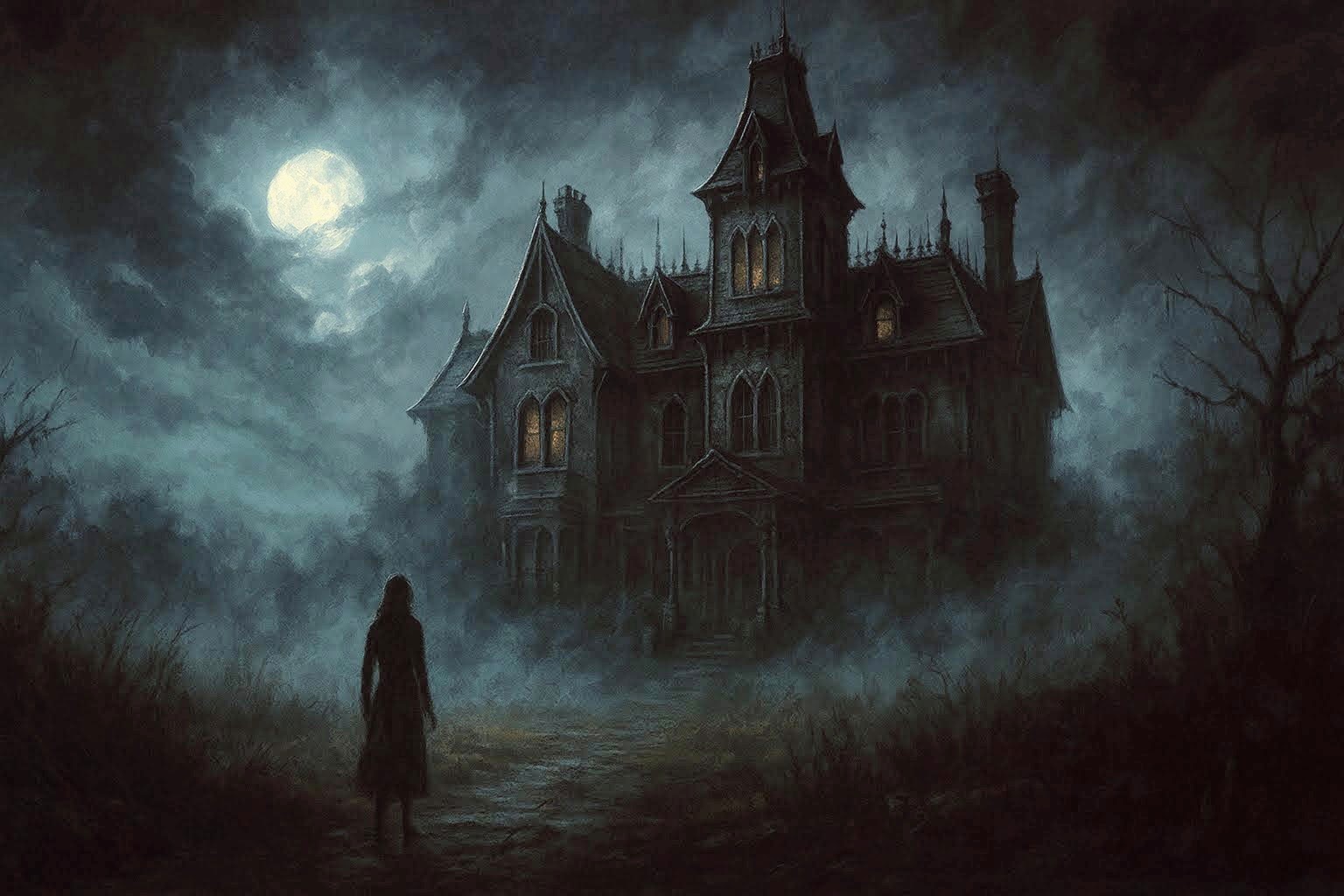
A Masterclass in Psychological Terror
I might be the only person to have not watched Netflix’s The Haunting of Hill House (maybe I will get to it this fall) even though I really enjoyed Mike Flanagan’s other Netflix miniseries. Lately, I’ve been feeling a bit of a reading slump and was desperately craving a genuinely spooky read to jolt me out of it, so I picked up The Haunting of Hill House by Shirley Jackson. Gothic horror and written in 1959, it seems like it’s right up my alley.
What struck me almost immediately about The Haunting of Hill House is how much of the horror is internal. Jackson masterfully creates a sense of dread and unease that infects you through Eleanor’s perspective, which becomes increasingly unreliable as her mental state frays.
A Simple Premise, A Complex Execution
The premise is simple enough: Dr. Montague, an investigator of supernatural phenomena, invites a small group of individuals with prior experiences of paranormal events to spend the summer at the infamous Hill House. His goal is to scientifically document any supernatural activity. The group consists of Eleanor Vance, a lonely and somewhat adrift woman with a troubled past; Theodora, a bohemian and artistic free spirit; and later, Luke Sanderson, the young heir to Hill House.
From the moment they arrive, Hill House feels… wrong. Jackson personifies the house, giving it a palpable sense of malevolence. It breathes, it watches, it subtly manipulates its inhabitants. The creaks and groans aren’t just old house noises; they feel deliberate, almost communicative.
Prefer to listen instead of read? 🎧
Get the audiobook version of our favorite reads for FREE when you try Audible Premium Plus.
Start Your 30-Day Free TrialAs an Amazon Associate, ClayReads earns from qualifying purchases.
Psychological vs. Supernatural Horror
But the real genius of Jackson’s writing lies in how she blurs the line between the supernatural and the psychological. Are the strange occurrences genuinely paranormal, or are they manifestations of the characters’ own deeply buried anxieties and insecurities? Eleanor, in particular, becomes increasingly susceptible to the house’s influence, and her internal monologue is a fascinating and unsettling descent into something that could be madness or could be the house’s insidious pull.
Jackson doesn’t rely on gore or overt scares. Instead, she uses suggestion, ambiguity, and the characters’ unreliable perceptions to build a truly chilling atmosphere. You’re constantly questioning what’s real and what’s imagined, right alongside the characters. This is the kind of horror that stays with you after you’ve put the book down, the kind that makes you look at the shadows in your own house a little differently.
The dynamic between the four individuals is also brilliantly portrayed. Their initial camaraderie slowly erodes under the weight of Hill House’s influence, and their interactions become tinged with suspicion and fear. Eleanor and Theodora’s complex, and at times almost symbiotic, relationship is particularly compelling and adds another layer of psychological intrigue to the narrative. And Luke, the reluctant heir, provides an outsider’s perspective, though he too is eventually drawn into the house’s strange orbit. Dr. Montague, initially the rational observer, finds his scientific detachment increasingly challenged by the inexplicable events unfolding around him.
A Masterclass in Tension
One of the book’s most memorable and genuinely terrifying moments perfectly exemplifies Jackson’s masterful technique. A few nights in, Eleanor and Theodora find themselves isolated in their shared bedroom. While Dr. Montague and Luke are outside chasing what they believe to be a phantom dog, a sudden, freezing cold descends on the women’s room.
Then, the noise begins: a deafening boom-boom-boom prowling down the hallway, stopping right outside their door. The doorknob rattles violently, the wood bows inward as if a giant is hammering it with a battering ram, but it never quite bursts open. Jackson draws the sequence out beat by beat, alternating the deafening pounding with dead silences where the terrified women can hear each other breathing.
The psychological vise tightens even further the next morning. In the daylight, Luke discovers a message written in jagged, chalky letters across the hallway wallpaper:
HELP ELEANOR COME HOME.
The house has made things personal. Eleanor, humiliated and terrified, insists she didn’t write it. Theodora believes her, but a kernel of doubt is planted. The social fabric of the group frays right where the supernatural pressure is highest. This escalation works on multiple levels. The targeted menace singles out Eleanor by name, and the physical impossibility of the events adds another layer of unsettling mystery, signaling that the house plays by rules we can’t possibly parse.
Final Thoughts & The Netflix Connection
I am not an expert on gothic horror, but The Haunting of Hill House seems like a perfect introduction for newbies. The isolated setting, the decaying mansion with a dark history, the sense of oppressive atmosphere, it’s all there. Jackson elevates the genre by focusing on the internal landscape of her characters, making the true horror reside not in external monsters but in the fragility of the human mind and the power of isolation and suggestion.
The book’s ending is abrupt, ambiguous, and terrifyingly final. Jackson doesn’t give you a clean, tidy resolution. Instead, the final moments leave you questioning the very nature of Eleanor’s fate and the true power of Hill House. It’s an ending that cements the book as a psychological masterpiece, leaving you with a lingering, philosophical chill rather than a simple feeling of fear.
If you’re looking for a spooky read that will genuinely unsettle you and stay with you long after you’ve finished the last page, then I wholeheartedly recommend The Haunting of Hill House. It’s less about things jumping out at you and more about a persistent, creeping dread that insinuates itself into your thoughts.
I can see why the Netflix series was so popular if it managed to capture even a fraction of the book’s atmosphere and psychological depth. Now I’m even more curious to see how Flanagan interpreted Jackson’s work (maybe this fall!).
Have you read The Haunting of Hill House? What were your thoughts? Did it get under your skin like it did mine? And for those who have seen the Netflix series, how did it compare to the book? Let me know in the comments below, I’m always curious to hear your perspectives!

 using WordPress and
Comments are closed